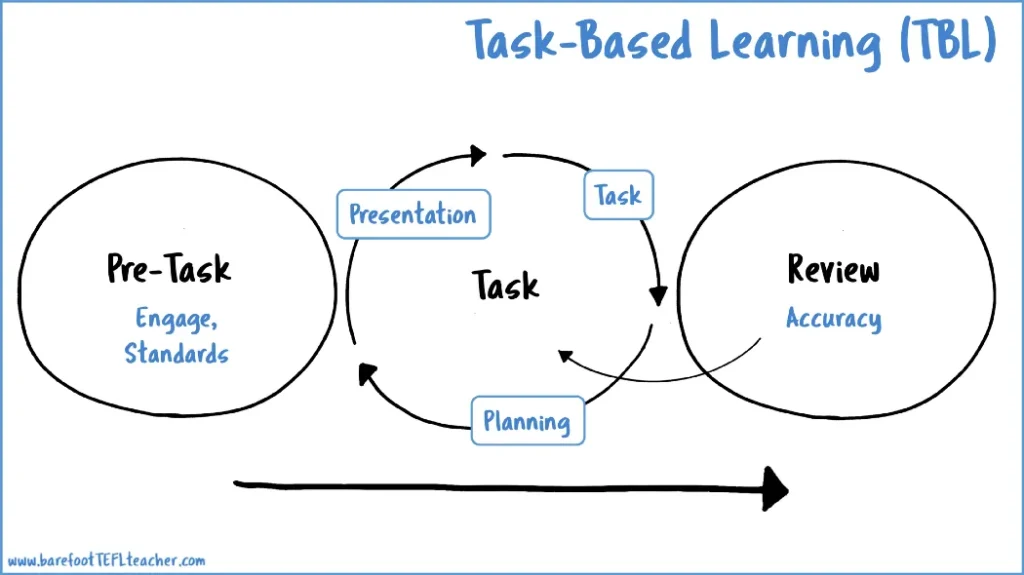


Task-Based language teaching developed out of communicative language teaching and is considered a branch of it. Educators wanted to move on with this teaching method for a various reasons. Some shifted to a task-based syllabus to help learners improve their ability to convey meaning effectively, while others aimed to make classroom language genuinely communicative rather than relying on artificial activities that lack real-world experience.
This method focuses on the use of authentic language to complete meaningful tasks in the target language. The focus is on communication and outcome not grammar drills. Target language is the primary language of the classroom but if it is needed their mother tongue can be used to explain complex task instructions or grammar/vocabulary points.
Speaking is the most emphasized skill and listening is also important because it support communication. Reading and writing tasks are integrated depending on the task.
Grammar is not taught in a traditional way but adressed when in the need of usage during or after task.
Assigned tasks must have a clear goal, meaningul communication and students need to produce a result or product. Information-Gap Tasks, Problem-Solving Tasks, Role Play Tasks, Project Based Tasks can be applied during the class.

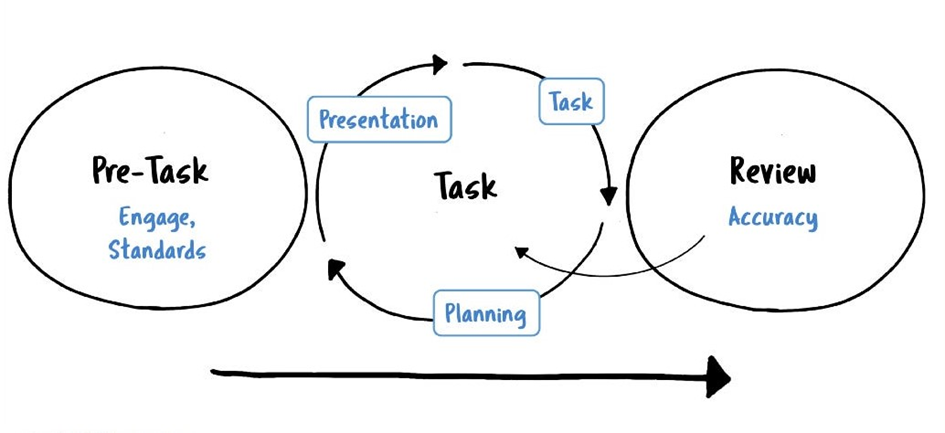
Before students begin with the task, teachers introduce the topic, teach key words and show model example. After the task, it is discussed performance, teacher correct common errors and highlight useful grammar.
Task-Based Language Teaching Method hasn’t disappeared but it has lost its dominance. It is again because of exam-oriented Education system and lack of teacher training and classrom/time management.